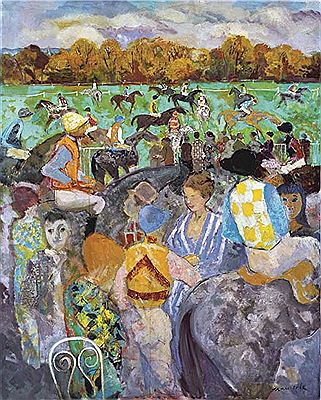
Son of the draughtsman Juan Grau Miró, Grau Sala combined his attendance at the Barcelona School of Fine Arts with an essentially self-taught training. In 1930 he held his first exhibition at the... Read full biography
Son of the draughtsman Juan Grau Miró, Grau Sala combined his attendance at the Barcelona School of Fine Arts with an essentially self-taught training. In 1930 he held his first exhibition at the Badriñas gallery in Barcelona. At the outbreak of the Civil War, in 1936, he moved to Paris, where he... Read full biography
Son of the draughtsman Juan Grau Miró, Grau Sala combined his attendance at the Barcelona School of Fine Arts with an essentially self-taught training. In 1930 he held his first exhibition at the Badriñas gallery in Barcelona. At the outbreak of the Civil War, in 1936, he moved to Paris, where he settled in the Montparnasse colony of Spanish artists. That same year he was awarded the first Carnegie Prize. During the twenty-five years he spent there he became closely acquainted with the... Read full biography
Son of the draughtsman Juan Grau Miró, Grau Sala combined his attendance at the Barcelona School of Fine Arts with an essentially self-taught training. In 1930 he held his first exhibition at the Badriñas gallery in Barcelona. At the outbreak of the Civil War, in 1936, he moved to Paris, where he settled in the Montparnasse colony of Spanish artists. That same year he was awarded the first Carnegie Prize. During the twenty-five years he spent there he became closely acquainted with the avant-garde, although he always favoured a colourist figuration derived from Impressionism and Fauvism. It was a path already taken by the commercial circuit, surpassed in terms of novelty by Cubism and Surrealism, but which was kept alive at a high level... Read full biography
Son of the draughtsman Juan Grau Miró, Grau Sala combined his attendance at the Barcelona School of Fine Arts with an essentially self-taught training. In 1930 he held his first exhibition at the Badriñas gallery in Barcelona. At the outbreak of the Civil War, in 1936, he moved to Paris, where he settled in the Montparnasse colony of Spanish artists. That same year he was awarded the first Carnegie Prize. During the twenty-five years he spent there he became closely acquainted with the avant-garde, although he always favoured a colourist figuration derived from Impressionism and Fauvism. It was a path already taken by the commercial circuit, surpassed in terms of novelty by Cubism and Surrealism, but which was kept alive at a high level thanks to masters such as Bonnard, Chagall and Dufy. In fact, he soon became known in Paris as the successor to the Impressionist spirit and... Read full biography
Emilio Grau-Sala - Artist Info
About Emilio Grau-Sala: Books
Books & Publications (1)
Publications based on askART research. List may not be comprehensive.
The Artists Bluebook 34,000 North American Artists to March 2005
2005
AskART.com Inc. - Dunbier, Lonnie Pierson (Editor)