Page loaded successfully. Showing keywords for Emilio Grau-Sala.
Artist Keywords
Keywords page for Emilio Grau-Sala ((1911 - 1975)), known for Abstract florals-still life, figure and genre painting, stage design, illustration. Showing associated keywords and tags.
Emilio Grau-Sala KEYWORDS
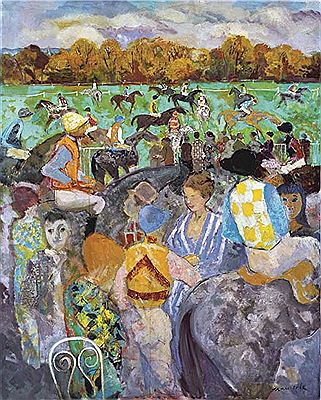
1911 Barcelona, Spain - 1975 Barcelona, Spain. Known for: Abstract florals-still life, figure and genre painting, stage design, illustration.
Son of the draughtsman Juan Grau Miró, Grau Sala combined his attendance at the Barcelona School of Fine Arts with an essentially self-taught training. In 1930 he held his first exhibition at the... Read full biography
Son of the draughtsman Juan Grau Miró, Grau Sala combined his attendance at the Barcelona School of Fine Arts with an essentially self-taught training. In 1930 he held his first exhibition at the Badriñas gallery in Barcelona. At the outbreak of the Civil War, in 1936, he moved to Paris, where he... Read full biography
Son of the draughtsman Juan Grau Miró, Grau Sala combined his attendance at the Barcelona School of Fine Arts with an essentially self-taught training. In 1930 he held his first exhibition at the Badriñas gallery in Barcelona. At the outbreak of the Civil War, in 1936, he moved to Paris, where he settled in the Montparnasse colony of Spanish artists. That same year he was awarded the first Carnegie Prize. During the twenty-five years he spent there he became closely acquainted with the... Read full biography
Son of the draughtsman Juan Grau Miró, Grau Sala combined his attendance at the Barcelona School of Fine Arts with an essentially self-taught training. In 1930 he held his first exhibition at the Badriñas gallery in Barcelona. At the outbreak of the Civil War, in 1936, he moved to Paris, where he settled in the Montparnasse colony of Spanish artists. That same year he was awarded the first Carnegie Prize. During the twenty-five years he spent there he became closely acquainted with the avant-garde, although he always favoured a colourist figuration derived from Impressionism and Fauvism. It was a path already taken by the commercial circuit, surpassed in terms of novelty by Cubism and Surrealism, but which was kept alive at a high level... Read full biography
Son of the draughtsman Juan Grau Miró, Grau Sala combined his attendance at the Barcelona School of Fine Arts with an essentially self-taught training. In 1930 he held his first exhibition at the Badriñas gallery in Barcelona. At the outbreak of the Civil War, in 1936, he moved to Paris, where he settled in the Montparnasse colony of Spanish artists. That same year he was awarded the first Carnegie Prize. During the twenty-five years he spent there he became closely acquainted with the avant-garde, although he always favoured a colourist figuration derived from Impressionism and Fauvism. It was a path already taken by the commercial circuit, surpassed in terms of novelty by Cubism and Surrealism, but which was kept alive at a high level thanks to masters such as Bonnard, Chagall and Dufy. In fact, he soon became known in Paris as the successor to the Impressionist spirit and... Read full biography
Emilio Grau-Sala - Artist Info
About Emilio Grau-Sala: Keywords
Keywords (19)
Art Method
- •Easel Painting
Art Media
Art Style
- •Abstraction and Realism; Semi Abstract
- •Abstraction, Abstract
Art Subject
- •Figure, Figurative Humans
- •Interior Scenes
- •Still Life
Geography/Places Lived and/or Worked
- •Barcelona, Spain
Chronology
- •Early 20th Century Before 1950
- •Late 20th Century After 1950
Added Description
- •Artist Has Artist Family Members