Page loaded successfully. Showing keywords for Stuart Davis.
Artist Keywords
Keywords page for Stuart Davis ((1892 - 1964)), known for Abstraction, mod-real imagery. Showing associated keywords and tags.
Stuart Davis KEYWORDS
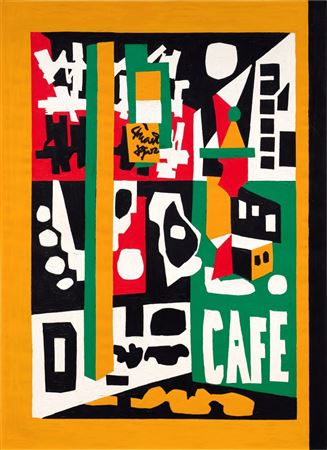
1892 Philadelphia, Pennsylvania - 1964 New York City. Known for: Abstraction, mod-real imagery.
Lots Sold: 66%, High Price: $12.2M (2024), Per sq in: $9427 (2015).
Born in Philadelphia in 1892, Stuart Davis is known by many art historians as the American painter most influenced by Cubism. Art historian Norman Geske described Davis' career as a "near classical... Read full biography
Born in Philadelphia in 1892, Stuart Davis is known by many art historians as the American painter most influenced by Cubism. Art historian Norman Geske described Davis' career as a "near classical demonstration of the process by which American painting of the twentieth century came of age." (40).... Read full biography
Born in Philadelphia in 1892, Stuart Davis is known by many art historians as the American painter most influenced by Cubism. Art historian Norman Geske described Davis' career as a "near classical demonstration of the process by which American painting of the twentieth century came of age." (40). Davis moved from journalistic illustration to Social Realism, to Expressionism, to Cubism, ultimately becoming one of America's leading abstractionists. Strongly influenced by Fernand Leger and the... Read full biography
Born in Philadelphia in 1892, Stuart Davis is known by many art historians as the American painter most influenced by Cubism. Art historian Norman Geske described Davis' career as a "near classical demonstration of the process by which American painting of the twentieth century came of age." (40). Davis moved from journalistic illustration to Social Realism, to Expressionism, to Cubism, ultimately becoming one of America's leading abstractionists. Strongly influenced by Fernand Leger and the New York Armory Show of 1912, he developed his own unique style of Cubism, which also incorporated Realism. Along with Max Weber, he is credited with being the importer of Cubism to the United States from France at a time when the public was more... Read full biography
Born in Philadelphia in 1892, Stuart Davis is known by many art historians as the American painter most influenced by Cubism. Art historian Norman Geske described Davis' career as a "near classical demonstration of the process by which American painting of the twentieth century came of age." (40). Davis moved from journalistic illustration to Social Realism, to Expressionism, to Cubism, ultimately becoming one of America's leading abstractionists. Strongly influenced by Fernand Leger and the New York Armory Show of 1912, he developed his own unique style of Cubism, which also incorporated Realism. Along with Max Weber, he is credited with being the importer of Cubism to the United States from France at a time when the public was more interested in Social Realism and American Scene painting with people and places that were recognizable. Through his... Read full biography
Stuart Davis - Artist Info
About Stuart Davis: Keywords
Keywords (89)
Art Method
- •Collage and/or Decoupage
- •Easel Painting
- •Graphic Design, Printmaking, Lithography, Etching, Woodblocks
- •Illustration, Illustrator
- •Murals: Design, Painting, Fresco, Mosaic, Glass
- •Sketch, Sketching
Art Media
Art Style
- •Abstraction, Abstract
- •Modernist, Modernism (Partially Abstract, Leading Edge)
- •Pop Art, Popular Culture
- •Precisionism
- •Pure Abstraction, Line, Shape, Color, Texture
- •Synchromism
Art Subject
- •American Scene
- •Birds, Ornithology, Avian Art
- •Chinatown in Any North American City
- •Figure, Figurative Humans
- •Genre, Human Activity, Daily Life
- •Landscape, Nature, Rural Scene
- •Marine, Maritime, Riverfront, Boats, Canoes, Steam Boats, Nautical
- •New York City
- •Portraits, Portraiture
- •Seascapes, Seasides
- •Social Realism
- •Still Life
- •Townscape, Village Scenes
- •Urban Landscape, Cityscape
- •Waterfowl
Geography/Places Lived and/or Worked
- •Cape Ann, Massachusetts: Gloucester, Rockport, North Shore
- •Long Island, New York
- •New Mexico Before 1940
- •Provincetown, Massachusetts
Art Association
- •Brooklyn Society of Artists
- •Federation of Modern Painters and Sculptors
- •Salons of America
- •Society of Independent Artists-
Art Teacher
- •John Sloan
- •Robert Henri
Art School
- •Art Students League of New York, Student
- •Art Students League of New York, Teacher
- •Famous Artists Correspondence School, Teacher
- •New School For Social Research (The New School), Teacher
Chronology
- •Early 20th Century Before 1950
- •Late 20th Century After 1950
Art Collection
- •Anschutz Collection
- •Bakkom Photo Collection, St. Paul, Minnesota (2)
- •Daniel J Terra Collection
- •Edith and Milton Lowenthal
- •Rockefeller Center, New York City
- •Sara Roby Foundation
Added Description
- •Abstraction Specialty
- •Art Educator:Teaching, Scholarship, Workshops and/or Writing
- •Mural Specialty
- •Printmaking Specialty
- •WPA Artist, Federal Art Project, Murals and Easel Paintings
Artist Colony
- •Rocky Neck, Gloucester, Cape Ann Massachusetts
Notable Commercial Gallery Representation, Pre 21s
- •Edith Halpert Downtown Gallery, New York
- •Kootz Gallery, New York City
- •Whitney Studio Club, Later Whitney Museum of American Art
Exhibition/Expo: Regional/National/International
- •AskART Panama Pacific Expo
- •Panama Pacific Exhibition of 1915
- •Venice Biennale
Exhibition of Art Association
- •Brooklyn Society of Artists-
- •National Academy of Design, New York
- •Salons of America-
- •Society of Independent Artists--
Exhibition of Museum
- •Art Institute of Chicago
- •Brooklyn Museum of Art
- •Carnegie Institute, International Exhibition
- •Corcoran Gallery and/or Art School, Washington DC
- •Metropolitan Museum of Art
- •Museum of Modern Art, New York
- •Smithsonian Institution/Museums
- •Solomon R. Guggenheim Museum/Museum of Non Objective Painting
- •Whitney Biennial Museum of American Art
Exhibition of Special Venue, Art Parks
- •Armory Show 1913, New York
Exhibition By An Art School
- •The Pennsylvania Academy of the Fine Arts