Nicholas Krushenick was born in 1929 in New York City. Following World War II army service, he studied at the Art Students League from 1948-1950 and the Hofmann Art School in 1950-1951. Krushenick... Read full biography
Nicholas Krushenick was born in 1929 in New York City. Following World War II army service, he studied at the Art Students League from 1948-1950 and the Hofmann Art School in 1950-1951. Krushenick went from Cubism to Abstract-Expressionism, dropping the use of oil paints around 1960 for acrylics,... Read full biography
Nicholas Krushenick was born in 1929 in New York City. Following World War II army service, he studied at the Art Students League from 1948-1950 and the Hofmann Art School in 1950-1951. Krushenick went from Cubism to Abstract-Expressionism, dropping the use of oil paints around 1960 for acrylics, and arriving at a style emphasizing fluorescent colors and black outlines of hard-edged, geometric shapes. While Krushenick was a contemporary of the Pop artists, and his work has the look of their... Read full biography
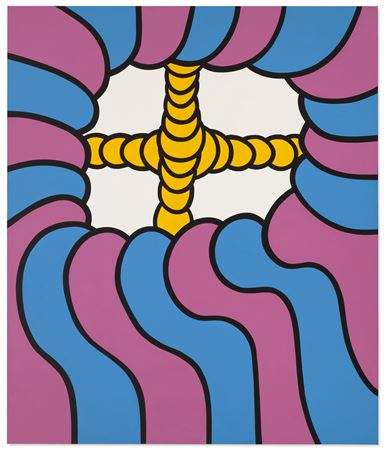
Nicholas Krushenick was born in 1929 in New York City. Following World War II army service, he studied at the Art Students League from 1948-1950 and the Hofmann Art School in 1950-1951. Krushenick went from Cubism to Abstract-Expressionism, dropping the use of oil paints around 1960 for acrylics, and arriving at a style emphasizing fluorescent colors and black outlines of hard-edged, geometric shapes. While Krushenick was a contemporary of the Pop artists, and his work has the look of their simplistic, mass-media forms, no recognizable objects are depicted. Nicholas Krushenick's work is in the Albright-Knox Art Gallery, Buffalo, New York; Dallas Museum of Fine Arts; Los Angeles County Museum of Art; Hirshhorn Museum at the Smithsonian... Read full biography
Nicholas Krushenick was born in 1929 in New York City. Following World War II army service, he studied at the Art Students League from 1948-1950 and the Hofmann Art School in 1950-1951. Krushenick went from Cubism to Abstract-Expressionism, dropping the use of oil paints around 1960 for acrylics, and arriving at a style emphasizing fluorescent colors and black outlines of hard-edged, geometric shapes. While Krushenick was a contemporary of the Pop artists, and his work has the look of their simplistic, mass-media forms, no recognizable objects are depicted. Nicholas Krushenick's work is in the Albright-Knox Art Gallery, Buffalo, New York; Dallas Museum of Fine Arts; Los Angeles County Museum of Art; Hirshhorn Museum at the Smithsonian Institution, Washington, D.C.; the Metropolitan Museum of Art and Museum of Modern Art in New York City. Source: Michael David Zellma... Read full biography