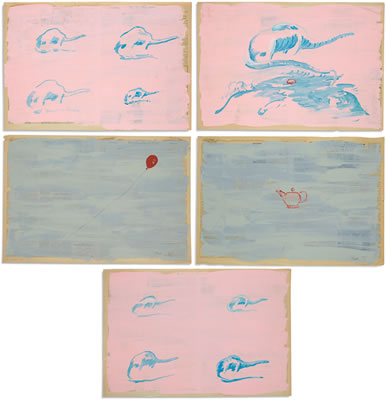
The following review, by Holland Cotter, is from The New York Times, October 21, 2010. Paul Thek, the subject of a ragged, moving and much-anticipated retrospective at the Whitney Museum of American... Read full biography
The following review, by Holland Cotter, is from The New York Times, October 21, 2010. Paul Thek, the subject of a ragged, moving and much-anticipated retrospective at the Whitney Museum of American Art, was only 54 when he died of AIDS in 1988. But by then he had already slipped through the cracks... Read full biography
The following review, by Holland Cotter, is from The New York Times, October 21, 2010. Paul Thek, the subject of a ragged, moving and much-anticipated retrospective at the Whitney Museum of American Art, was only 54 when he died of AIDS in 1988. But by then he had already slipped through the cracks of art history. Or rather he had fallen into one of the deep trenches that divide that history into artificial islands with names like Pop and Minimalism. Thek came to art with so much going for him... Read full biography
The following review, by Holland Cotter, is from The New York Times, October 21, 2010. Paul Thek, the subject of a ragged, moving and much-anticipated retrospective at the Whitney Museum of American Art, was only 54 when he died of AIDS in 1988. But by then he had already slipped through the cracks of art history. Or rather he had fallen into one of the deep trenches that divide that history into artificial islands with names like Pop and Minimalism. Thek came to art with so much going for him — talent, looks, energy and imaginative peculiarity — that for a decade or so he was an island unto himself, an archipelago even. In the early 1960s, when everyone else in New York was into hands-off fabrication and Benday dots, he was modeling... Read full biography
The following review, by Holland Cotter, is from The New York Times, October 21, 2010. Paul Thek, the subject of a ragged, moving and much-anticipated retrospective at the Whitney Museum of American Art, was only 54 when he died of AIDS in 1988. But by then he had already slipped through the cracks of art history. Or rather he had fallen into one of the deep trenches that divide that history into artificial islands with names like Pop and Minimalism. Thek came to art with so much going for him — talent, looks, energy and imaginative peculiarity — that for a decade or so he was an island unto himself, an archipelago even. In the early 1960s, when everyone else in New York was into hands-off fabrication and Benday dots, he was modeling hyper-realistic images of meat, raw and bleeding, from beeswax. Gross and funny, they had people buzzing.... Read full biography